What starts a light pulse?
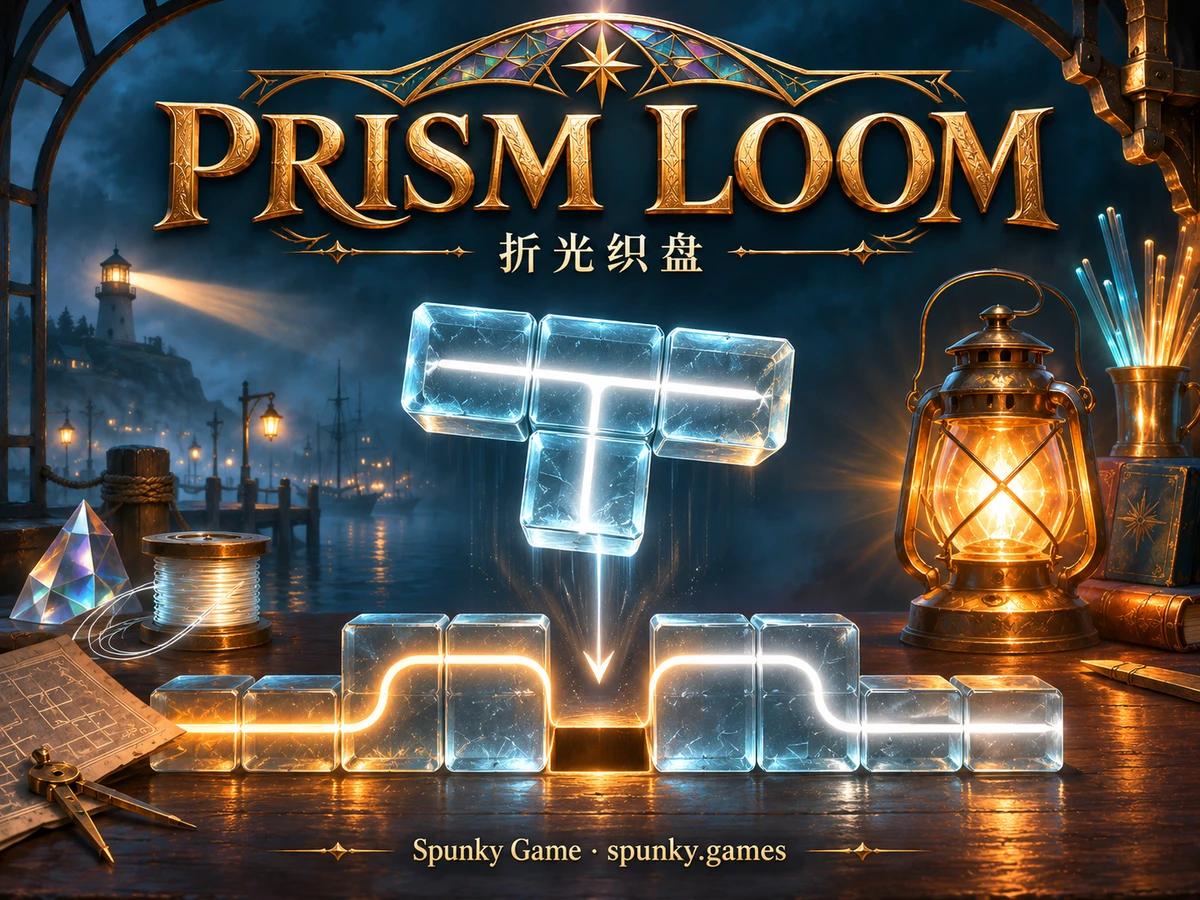
Fill all ten cells of a row to clear it. Rows above move down; the game then sends one pulse through the resulting board, even when several rows clear together.
SPUNKY ORIGINALS
Work the night shift in a fog-harbor workshop. Drop glass blocks, clear full rows and send light through matching fiber ports. Clearing space can also remove your bridge.
Work the night shift in a fog-harbor workshop. Drop glass blocks, clear full rows and send light through matching fiber ports. Clearing space can also remove your bridge.
Fill all ten cells of a row to clear it. Rows above move down; the game then sends one pulse through the resulting board, even when several rows clear together.
A thin white path shows connected glass. A lamp charges only when a real line-clear pulse reaches it. Matching colors and facing open ports are both required; ordinary locks do not add a pulse.
Every cell of the T has four open ports. Rotating a T changes its silhouette, while its ports stay open in all four directions. Other pieces can have directional ports.
Use arrows or A/D/S to move, Z/X or Up to rotate, Space to hard drop, and C to hold. P or Escape pauses. Touch buttons offer the same moves. After a result, R restarts.
The second order finishes after two cleared rows. A quick double clear earns more line points in fewer drops; preserving the path can earn lighting and stability bonuses. Both are valid deliveries.
Three fixed lighthouse orders and one free night shift are included. Keep a lamp charged over two consecutive pulses for stability. There are no accounts, online rankings or multiplayer modes.
Spunky Game · Prism Loom 1.0.0 · Phaser 4.2.1
Completed orders, the current run and separate audio preferences stay in this browser. Storage may be restricted in embedded or private browsing; the live game still works without it.
Music and effects have separate controls. Sound starts after your first interaction. Pausing or leaving the tab stops playback. All rule feedback is visible without sound.
Fill all ten cells of a row to clear it. Rows above move down; the game then sends one pulse through the resulting board, even when several rows clear together.
A thin white path shows connected glass. A lamp charges only when a real line-clear pulse reaches it. Matching colors and facing open ports are both required; ordinary locks do not add a pulse.
Every cell of the T has four open ports. Rotating a T changes its silhouette, while its ports stay open in all four directions. Other pieces can have directional ports.
The second order finishes after two cleared rows. A quick double clear earns more line points in fewer drops; preserving the path can earn lighting and stability bonuses. Both are valid deliveries.
Use arrows or A/D/S to move, Z/X or Up to rotate, Space to hard drop, and C to hold. P or Escape pauses. Touch buttons offer the same moves. After a result, R restarts.
Completed orders, the current run and separate audio preferences stay in this browser. Storage may be restricted in embedded or private browsing; the live game still works without it.
Music and effects have separate controls. Sound starts after your first interaction. Pausing or leaving the tab stops playback. All rule feedback is visible without sound.
Three fixed lighthouse orders and one free night shift are included. Keep a lamp charged over two consecutive pulses for stability. There are no accounts, online rankings or multiplayer modes.