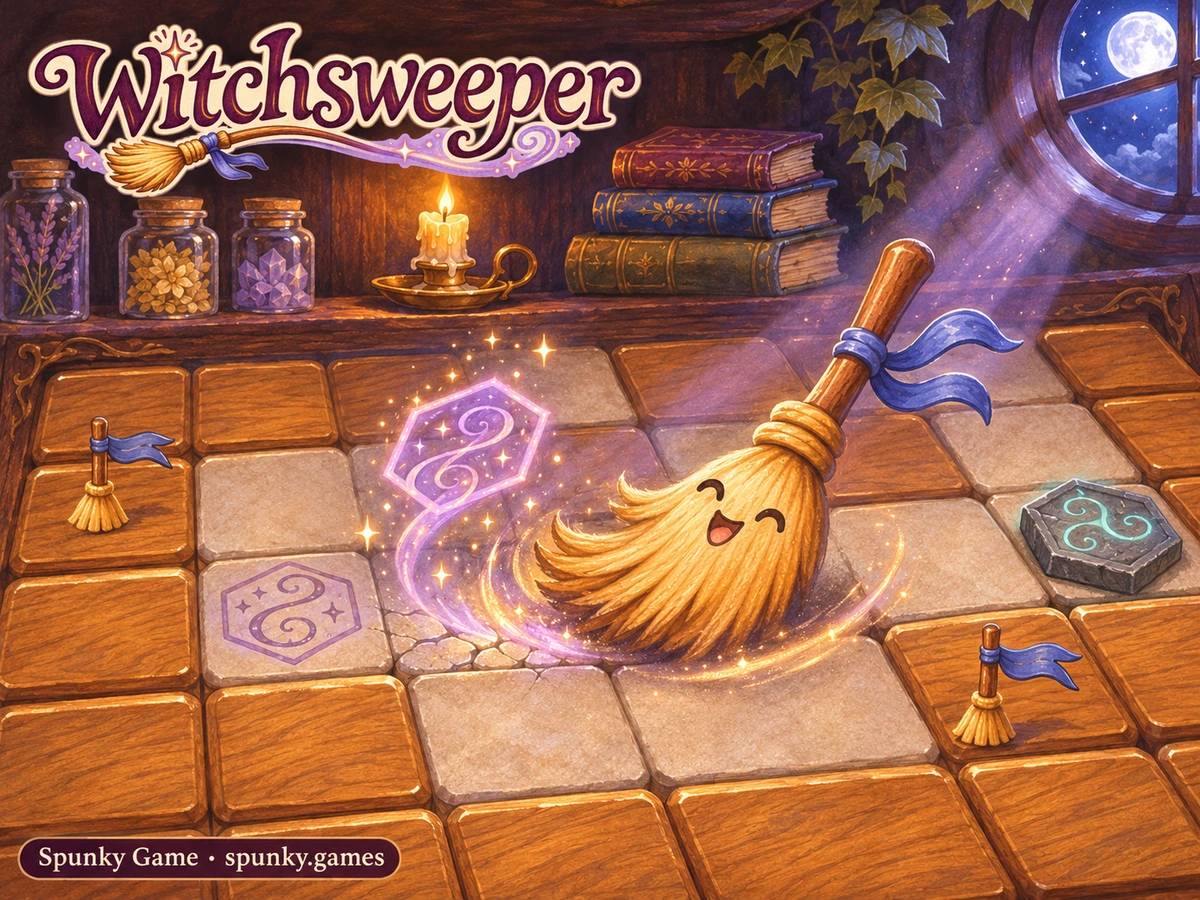
Start with the tile the room opens for you. Uncovering a safe tile reveals a clue, and a zero opens neighboring safe tiles in a cascade. Every number sums the weights of hexes reaching that tile rather than simply counting flags: Dust contributes 1, Stone 2, and Source 3, while Draft also reaches two tiles straight up, down, left, or right. A 3 can reflect three Dust hexes, one Stone plus one Dust, or a single Source, and removed hexes still count toward displayed numbers.
2
Using Minesweeper patterns
Start by looking for a clue whose full weight is already accounted for. In a Dust-only room, if a 1 touches one correctly flagged hex, its other covered neighbors are safe. The Codex also introduces the wall 1–1, 1–2 and 1–2–1 patterns. Check the type and reach of each hex before reusing those patterns on later floors.
3
Choosing a purification mode
Choose Manual or Automatic purification in Settings. Manual is the default: flag a hex, click or tap the flag, then confirm the cost. Once every safe tile is open, the quota is met and all Source hexes are dealt with, choose Finish or keep cleaning for the all-hexes star. Automatic waits for every safe tile, then purifies the remaining hexes before showing victory results. Costs, rewards, accessories and star rules work the same way. If you cannot afford the next sweep and still have stamina, tea can let you continue.
4
Managing stamina, glimmer, and tea
Purification costs stamina and earns glimmer. Tea trades 4 glimmer for 3 stamina before accessory bonuses. On later floors, paid hints draw from the same supply, so leave enough for tea if you plan to clean the entire board. Uncovering a hex by mistake also removes it, but costs stamina and earns no glimmer. At zero stamina, retry the room on a different layout. After a successful result, select Next Room.